If you’re researching cost of living in Bulgaria in 2026, chances are you’ve already seen dramatic claims online — especially around the euro switch. Many people predicted that once Bulgaria moved from the lev to the euro, prices would double overnight.
Now it’s 2026. The switch happened.
So instead of guessing, this article looks at real numbers from daily life in Sofia.
I live in Sofia, Bulgaria with my husband, and over the last year I’ve also created an expat community with people moving to Bulgaria from the US, Canada, the UK, EU countries, and Asia. They include retirees, remote workers, and families with children. Through this work, I see not just my own expenses, but also the patterns and concerns people face when relocating.
Looking for how to relocate to Bulgaria? I’ve helped other expats through this process.
→ Download my FREE Bulgarian Residency Checklist (includes documents needed for EU and non-EU citizens)
→ Get the Bulgaria Relocation Guide + Expat Q&A Chat (Lifetime Access)
→ Or let me help you with an all-in relocation assistance (Residence Permit, Housing, Medical and an ongoing support )
This article breaks down what living in Bulgaria actually costs right now, category by category, using updated 2026 data.
Monthly budget in Sofia, Bulgaria
For two people living together in Sofia, Bulgaria:
- A basic monthly budget comes to around 1,600 euros
- It covers rent, bills, groceries, transportation, and going out expenses
- This budget doesn’t include shopping, healthcare and travel expenses as they can be very different (later in the article I share our full budget with everything included)
Stuck in research mode?
Where to live?
Which documents do you need?
Do you register as a freelancer or as a company?
How to pay taxes?
Is Bulgaria even the right choice for you?
I’ve been there.
That’s why I created this Chat & Guide — so you don’t have to spend weeks in research mode, guessing your way through bureaucracy, or worrying about mistakes that could cost you time and money.
Rent and housing in Sofia (2026)
Housing is the biggest part of the cost of living in Bulgaria, especially in Sofia.
Our current rent:
- 750 euros per month
- Two-bedroom apartment
- Fully furnished and renovated
- Only one family lived there before us for one year
- Air conditioning in every room (four AC units total)
- Central heating in every room
Based on what I see right now in the market here are the averages for rent in Sofia, Bulgaria:
- 600–700 euros per month
Modern one-bedroom apartment in a good neighborhood - 800–900 euros per month
Two-bedroom apartment in similar condition
You can find cheaper or much more expensive options, but this is the realistic range for what most expats are actually looking for.
Important note for people moving to Bulgaria
Not every apartment that looks fine online will work for residency purposes. Even with a one-year contract, people can get rejected because the apartment doesn’t meet specific requirements.
This is why housing decisions matter beyond price alone. I cover this in detail in the housing section of my full relocation guide, because it’s one of the most common and expensive mistakes people make when moving to Bulgaria.

Short example: hotel prices and value
To give another perspective on housing value:
Right before Christmas, we stayed at a SPA hotel about one hour from Sofia for two nights.
- Price: around 150 euros per night
- Included:
- multiple mineral pools (hot and cold)
- several types of sauna
- breakfast and dinner included
- comfortable rooms
For comparison, in countries like the Netherlands, you often pay around 200 euros per night for a four-star city hotel that includes only the room and breakfast.
This kind of price-to-quality difference is one of the reasons many expats in Bulgaria feel daily life here still offers good value.
Utilities and monthly bills
Our monthly bills in Sofia:
- Heating (winter months): around 100 euros
- Water: 25 euros
- Electricity: 25 euros
These costs have not changed compared to the previous year.
Internet and mobile plans
- Home Wi-Fi (two-year contract): 10 euros per month
- Mobile plan (two-year contract): 20 euros per month
- unlimited data
- calls included
Even monthly plans without long contracts often cost around the same, just with limited data.
For people working remotely, internet reliability in Sofia has been stable for us.
Groceries in Bulgaria (2026)
A typical supermarket trip (for example, Billa or Lidl) now costs us 50–60 euros.
This includes:
- food
- meat and chicken
- occasional fish
- household items
- sometimes small appliances or clothing
What matters more is the monthly total.
For two people, groceries and household items together come to around 400–500 euros per month, which is very similar to what we spent previously.
Going out in Sofia: restaurants and cafés
Going out is another significant part of cost of living in Bulgaria 2026.
Based on real prices in Sofia, Bulgaria:
- A meal at a restaurant:
8–15 euros per person - Dinner for two (one drink each, tips optional):
30–40 euros
If you go:
- to a restaurant once a week
- and to a coffee shop a couple of times per week
A realistic monthly “going out” budget for 2 people is:
250–300 euros per month
Restaurant prices have increased gradually over time, but there was no sudden doubling after the euro switch. Tipping is optional in Bulgaria and does not significantly affect the overall cost.
In my total cost of living calculation “going out” is only 100 euros. We didn’t go out much recently and were focused on work. Many of my client decided to go through with relocation by the end of the year to make it easier with tax reports, so December got busy.
Healthcare costs for expats in Bulgaria
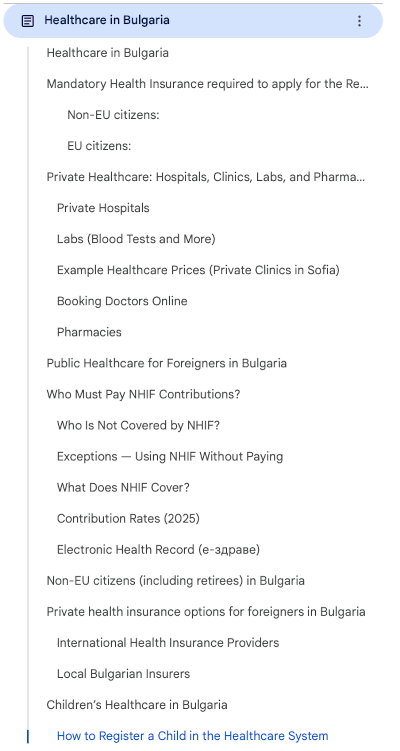
Healthcare costs depend heavily on whether you are an EU or non-EU citizen.
For EU citizens:
You get access to free Bulgarian healthcare and one visit to a GP can cost under 10 euro. You will need to pay monthly social security contributions and register in the system.
Read More: Residency Permit in Bulgaria for EU Citizens
For non-EU residents who recently moved:
- emergency insurance: around 8 euros per month per person (paid for the whole year in advance)
Out-of-pocket prices:
- Specialist visit: 50 euros
- Follow-up visit in the same month: 35 euros
- Scan at a doctor’s office: 40 euros
- MRI: starting from 200 euros per area
One important practical detail: many specialists have diagnostic equipment in their office, so tests can often be done during the same visit.
How to get discounts, find an English Speaking Doctor and book an appointment? How to use public or private healthcare and what insurance you need to buy for the residency permit? I cover these questions and more in my Bulgaria Relocation Guide.
Transportation in Sofia
- Public transport: under 1 euro per ride
- Taxi within the city: around 7 euros
- Airport to city center: 12–15 euros
Public transport in Sofia is clean, efficient, and reliable, which is one of the reasons we chose Sofia as our home base.
Coworking and remote work
Coworking spaces exist, but:
- hot desk pricing is 20–25 euros per day
- most coworkings cater to small companies rather than freelancers working daily from a hot desk
But if you need an office to register your company or to work with a small team – Sofia has many offers, starting from 250 euros per person per month for a private office at a cowering space.
Read More: Best City in Bulgaria for Digital Nomads and Remote Workers (2026)
Taxes and their impact on cost of living
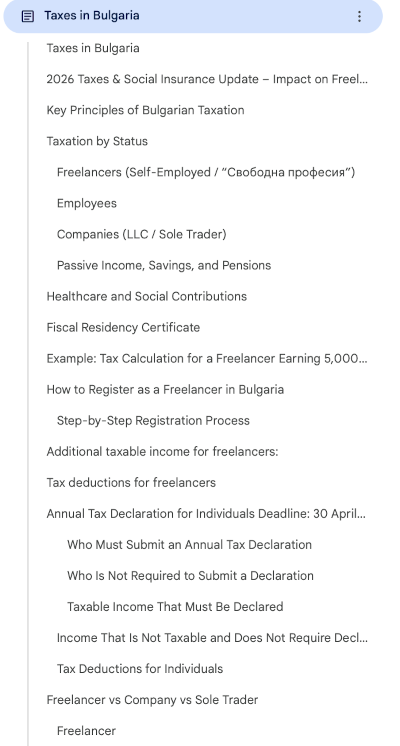
Taxes are not strictly part of cost of living, but they strongly affect your overall budget when moving to Bulgaria.
Key points:
- Flat income tax: 10%
- Social contributions 27.5%, but they are capped
- At higher incomes, social contributions do not exceed around 500 euros per month
In practice:
- At lower incomes (around 2,000 euros/month), Bulgaria may not be tax-efficient
- At higher incomes (4,000–5,000 euros/month and above), effective tax rates can be around 18%
Understanding tax structure is crucial, and this is where many people either save or lose significant money. I have them covered in my Bulgaria Relocation Guide and refer QA chat members to a local accountant I personally work with. Just recently one consultation with him helped one of my clients who works via payroll company save 12,000 year in a year after relocating to Bulgaria.
Retirees and living in Bulgaria
Many of my clients and Expat group members are retirees.
Read more: How to Retire in Bulgaria as a Non-EU Citizen (2026 Guide)
Good news:
- Pensions are not taxed in Bulgaria
For retirees with pensions of 1,500–3,000 euros per month, Bulgaria can offer a comfortable lifestyle, especially outside major cities.
Lifestyle & Personal Safety: Living in Bulgaria in 2026
One of the biggest reasons people stay in Bulgaria long-term has very little to do with spreadsheets. It’s the overall pace of life.
Daily life in Bulgaria feels noticeably more relaxed compared to many Western European countries. Society is less rigid, interactions feel more natural, and there is less pressure to constantly perform or present yourself in a certain way. People are polite and helpful, but there isn’t the same expectation to always be upbeat or overly formal.
For many expats in Bulgaria, especially those coming from highly regulated or high-stress environments, this creates a sense of mental space that’s hard to quantify but very real once you experience it.
Personal safety is another factor that strongly shapes quality of life. In Sofia and other major cities, I generally feel safe walking outside, even in the evening. I don’t feel the need to constantly watch my back, clutch my bag, or stay hyper-alert in public spaces.
This doesn’t mean Bulgaria is risk-free — common sense still applies, especially in crowded areas — but there is no constant underlying feeling of threat. Compared to many European capitals and cities in North America, daily life here feels calmer and more predictable.
For families, retirees, and remote workers alike, this combination of a slower pace and a strong sense of personal safety is a major part of why living in Bulgaria in 2026 continues to appeal beyond just the cost of living.
Did prices double after the euro switch?
Based on real spending in Sofia:
- Rent stayed the same
- Utilities stayed the same
- Internet and phone costs stayed stable
- Groceries did not spike dramatically
- Going out costs increased gradually, not suddenly
- Healthcare and transportation did not double
As of early 2026, I do not see evidence of prices doubling across daily living categories.
Final numbers: putting it all together
Basic monthly budget for two people in Sofia: around 1,600 euros. It includes rent (2-bedroom), bills, groceries, mobile & wifi, going out.
Our actual average cost of living in Sofia, Bulgaria (including travel, shopping and healthcare out of pocket) 2,500–3,000 euros. We are traveling every couple of months and have longer trips in the winter. So I’d say our overall budget is on the higher end for Bulgaria. However, similar lifestyle in Western Europe, Canada or US would cost us at least double or most likely triple in the capital cities.
If you’re planning on moving to Bulgaria
The two biggest sources of stress and unnecessary expenses are:
- housing mistakes
- lack of clarity around bureaucracy and residency