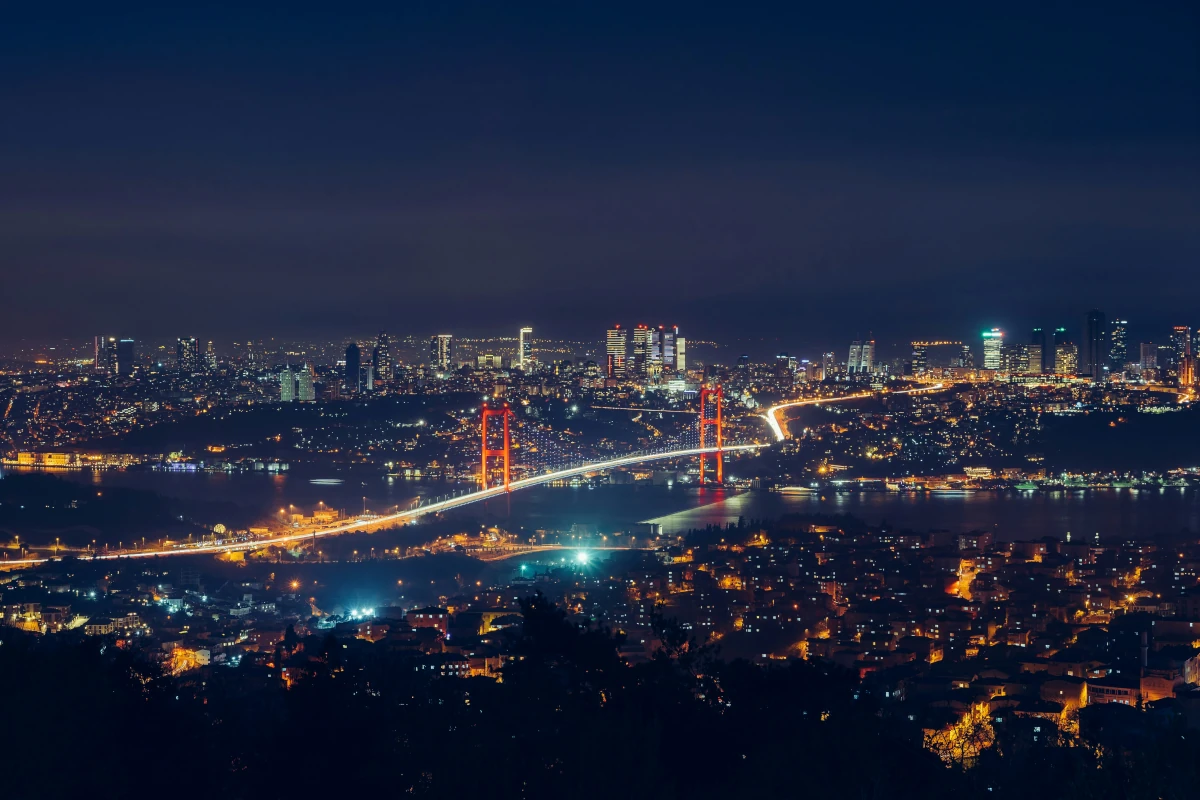
Three days in Istanbul, Turkey? It’s not enough — but it’s a solid start. This 3 day itinerary is for first-time visitors who want to see the city’s highlights without burning out.
You’ll find the top things to do and things to see in Istanbul, plus practical details that most guides skip — like how to find a toilet in a city park, and why you don’t need to buy anything at the bazaar to enjoy the experience.
Written by someone who’s been both a tourist and a resident, this is the kind of guide I wish I had on my first trip.
To avoid common scams, overpriced services, and tourist traps, get my detailed Istanbul Asian Side Guide here (it will save you 10x its cost on transportation and eating out alone):
https://olgapronkina.com/istanbul (secret bonus inside!)
Istanbul can be divided in 3 parts – Old City, European and Asian part, which makes it convenient to plan your visit. You will be able to go everywhere by public transport with IstanbulKart – metro and ferry (yes, there are public transport ferries, I’ll tell you about them later).
First-time visitors usually don’t need to be persuaded to go see the Sultan’s palace or Galata Tower with a nice city view. But they often miss the Asian part – none of the famous historical sights are there.
But especially if you are a younger tourist and want to see where locals and expats come to eat and drink, hang out with friends and party – you will not be disappointed. People are the best part of any culture, dont’t miss out on going to Moda, located just near the Kadikoy pier. Also, you will get a Bosphorus tour for the price of a public transport trip with that.

1st day plan: Old City in Istanbul
We don’t cover hotels and other places to stay in Istanbul in this article. But in case you didn’t have time to read about that yet: DO NOT stay in this part of the city. Don’t worry, it’s absolutely safe there.
But you will be surrounded with the usual tourist traps: overpriced restaurants, souvenir shops and crowds of tourists. And yes, an occasional scammer trying to show you the best shop or restaurant. Their opening line is usually “The Mosque is closed today”
To avoid common scams, overpriced services, and tourist traps, get my detailed Istanbul Asian Side Guide here (it will save you 10x its cost on transportation and eating out alone):
https://olgapronkina.com/istanbul (secret bonus inside!)
Hagia Sophia & Blue Mosque in Istanbul, Turkey
These two iconic landmarks sit just steps apart in Istanbul’s Sultanahmet district—often compared, always visited together, and each loaded with real history.
Hagia Sophia (Ayasofya)
- Built in 537 AD under Emperor Justinian I as the cathedral of Constantinople.
- Architects: Anthemius of Tralles and Isidore of Miletus.
- Function Timeline:
- Church for ~900 years
- Mosque from 1453 (after the Ottoman conquest)
- Museum from 1935 to 2020
- Back to mosque status in 2020 (free entry, but with restrictions during prayer times)
- Dome: 31 meters in diameter, a major architectural feat for its time.
- Mosaics: Stunning Byzantine mosaics remain, but some are now partially covered or not visible during prayer hours.
Surprising Detail: The building has survived multiple earthquakes thanks to early anti-seismic design—flexible bricks and hidden reinforcements.
Blue Mosque (Sultan Ahmed Mosque)
- Completed in 1616 under Sultan Ahmed I, directly facing Hagia Sophia.
- Nicknamed for its interior: over 20,000 handmade blue Iznik tiles line the walls.
- Unique Feature: Has six minarets—unusual at the time. Legend says the architect misunderstood the word altın(gold) as altı (six), but there’s no firm proof.
- Still an active mosque, open to visitors outside of prayer times.
Surprising Detail: To avoid controversy with Mecca’s Grand Mosque (which also had six minarets), Sultan Ahmed ordered a seventh minaret added to Mecca.
Visitor Tips
- Hagia Sophia:
- Free entry, but expect lines and crowd control.
- Dress modestly; women must cover their heads (scarves provided).
- Best to visit outside prayer times for views of the dome and remaining mosaics.
- Blue Mosque:
- Also free, also requires modest dress.
- Currently undergoing interior renovations (check current status before going).
- Visit around midday for quieter moments between prayer calls.
Both buildings represent Istanbul’s layered identity: Roman, Byzantine, Ottoman, and modern. Visiting one is history—visiting both is perspective.

Blue Mosque has free entrance, but women will have to cover their hair and legs (they will give you a special cloth for free if you didn’t bring your own scarf). People with or without religion are welcome inside, but no photo during prayer hours. It happens several times during the day, lasts about 30 min, so don’t worry about the timing.
Hagia Sophia is a museum now and the entrance fee is 60TL (closed 6PM,in the summer, 4pm in the winter).

8 Best Places in Turkey for Every Traveler
Don’t know where in Turkey you can find what you want? Let me help.
I’ve been traveling in and out of Turkey for years and finally spent a year living in Antalya, uncovering the hidden gems and highlights of this beautiful country.
Whether you’re a beach lover, a history enthusiast, or an adventurous hiker, I’ve explored it all. Let me be your guide and share the best destinations depending on the kind of traveler you are.
Topkapi Palace in Istanbul, Turkey
Once the beating heart of the Ottoman Empire, Topkapi Palace was home to sultans, courtiers, and secrets for nearly 400 years. Built in the 15th century by Mehmed the Conqueror, it’s not just a palace—it’s a sprawling city-within-a-city overlooking the Bosphorus.
What Makes It Unique
- No grand façade: Unlike European palaces, Topkapi isn’t about a single showy building. It’s a maze of pavilions, courtyards, kitchens, and gardens—more like a royal compound than a castle.
- The Harem: Not just a “ladies’ quarters.” The harem was a power center, home to the sultan’s mother (who often held immense influence), wives, and hundreds of women, guarded by black eunuchs.
- The Spoonmaker’s Diamond: An 86-carat diamond with a murky backstory, once allegedly found by a fisherman in a rubbish heap.
- World’s biggest kitchen complex: Feeding up to 5,000 people daily, with an insane porcelain collection (over 12,000 pieces—mostly Chinese).
- Sacred relics: Yes, the palace houses religious relics, including what is claimed to be the Prophet Muhammad’s cloak and sword. There’s even a Quran recitation that happens nonstop in this section.
Visitor Tips
- Go early to avoid school groups and cruise ship crowds.
- Don’t skip the Harem — it’s a separate ticket but has the best interiors.
- Bring water — it’s big, and there’s not much shade.
- Wear decent shoes — lots of walking on stone and uneven ground.
- Closed on Tuesdays.
Expect to spend 2–4 hours minimum. If you like layers of power, scandal, and history all in one place, Topkapi doesn’t disappoint.
Gülhane Park in Istanbul, Turkey
Tucked beside the walls of Topkapi Palace, Gülhane Park is Istanbul’s oldest and most historic public park—a green oasis once reserved for sultans, now open to all.
Why It’s Special
- Used to be part of Topkapi: Literally the palace’s backyard garden. Sultans strolled here among roses (Gülhane means “rose house”), sipping sherbet and making political decisions under plane trees.
- Site of a revolution: In 1839, the Tanzimat reforms—which modernized the Ottoman Empire—were announced right here, under a tree still standing today.
- Science meets serenity: It’s home to Istanbul’s first museum of the history of science and technology in Islam, hidden in an old imperial stables building.
- Birds, cats, and tea: Local life thrives here. You’ll see students studying, elderly people chatting over tea, and a healthy population of friendly street cats.
If Topkapi is about power, Gülhane is about pause. It’s where the empire caught its breath—and now, you can too.

Visitor Tips
- Free entrance and a perfect place to decompress after the palace.
- Enter from the lower gate near Sirkeci to walk uphill toward Topkapi.
- Great photo ops in spring (tulip season) and autumn (golden light, quieter paths).
- Cheap café views: Grab tea at the Setüstü Café for one of the best Bosphorus views in town—without the price tag.
- Public toilets are available, but for the price of 1TL, paid with Istanbulkart, you won’t be able to enter without it. A solution can be to ask someone else to pay and give them back 1TL in cash.
Gulhane Park in Istanbul is a 100% safe place, just beware the usual tourist traps – people who seem to be waaay to friendly or trying to invite you to “the best restaurant in Istanbul” etc.
To avoid common scams, overpriced services, and tourist traps, get my detailed Istanbul Asian Side Guide here (it will save you 10x its cost on transportation and eating out alone):
https://olgapronkina.com/istanbul (secret bonus inside!)
Lunchtime
You’ll be tempted just to eat whatever is sold on the street. Turkish food always have lots of meet, so save some space for a nice Teras Cafe. From there the cityview is amazing, you’ll get two for the price of one – food&chill and great Bosphorous view. You can find several cafes like that near Suleymaniye Mosque.
Suleymaniye Mosque and Grand Bazaar

Suleymaniye Mosque
Süleymaniye Mosque – Quick Guide with Verified Facts
Perched high above the Golden Horn, Süleymaniye Mosque is one of Istanbul’s most elegant and historically significant landmarks. It was commissioned by Suleiman the Magnificent and designed by the legendary architect Mimar Sinan.
Key Facts
- Completed in 1557 during the Ottoman Empire’s golden age.
- Architect: Mimar Sinan, the most renowned Ottoman architect, called this mosque his “journeyman work” (he considered Selimiye Mosque in Edirne his masterpiece).
- Design: Inspired by Hagia Sophia’s dome but reinterpreted with cleaner lines and Ottoman refinement. The main dome is 53 meters high and 26.5 meters in diameter.
- Complex (külliye): More than a mosque—it included a hospital, kitchen, baths, library, and schools. Many of the original structures still stand.
- Burial site: Both Suleiman the Magnificent and his wife Hürrem Sultan (Roxelana) are buried here in separate mausoleums in the courtyard.
Surprising Facts
- Acoustics engineering: Sinan embedded hollow clay pots in the dome to improve sound quality—long before modern amplification.
- Smoke control: The lamp soot from candles and oil lamps was collected through hidden airflow designs and used to make ink for royal documents.
- Earthquake resistance: The mosque has survived major quakes with minimal damage, thanks to flexible foundations and balanced proportions.
Visitor Tips
- Open to all, but closed during prayer times—check the schedule before visiting.
- Less crowded than Hagia Sophia or Blue Mosque; ideal for peaceful visits and photography.
- Modest clothing required (free coverings at the entrance).
- Don’t skip the garden terrace—panoramic views over the Bosphorus and Golden Horn.
- Free entry.
Süleymaniye isn’t just monumental—it’s balanced, serene, and built to last. A quiet giant in Istanbul’s skyline.

Grand Bazaar
The Grand Bazaar (Kapalıçarşı) is one of the world’s oldest and largest covered markets—a chaotic, colorful maze that has been trading nonstop (almost) since the 15th century.
It’s a big market aimed mostly at tourists. You will find spices, local sweets, tea, jewellery, scarfs etc. But even if you don’t want to spend money on shopping – just look at the photos, it’s a place worth your time.
What You Should Know
- Founded in 1461 by order of Sultan Mehmed the Conqueror.
- Size: Over 60 covered streets and around 4,000 shops.
- Goods sold: Gold, silver, carpets, ceramics, spices, leather, textiles, antiques, souvenirs, and fakes—ranging from decent to designer-level.
- Daily visitors: Estimated at 250,000 to 400,000 people, making it one of the most visited tourist sites in the world.
Surprising Facts
- Originally a financial hub: It started as a place for textile and money exchange, not souvenirs.
- No fixed prices: Bargaining isn’t just accepted—it’s expected.
- Post-quake survivor: The bazaar has been rebuilt multiple times after fires and earthquakes, with many current structures dating from the 19th century.
- Hidden mosques and fountains: Several small prayer rooms, fountains, and even tombs are tucked inside if you know where to look.
Visitor Tips
- Use the Beyazıt or Nuruosmaniye Gates for easier orientation.
- Avoid Sundays — the bazaar is closed.
- Best time: Weekday mornings (less crowded, shopkeepers more relaxed).
- Haggle respectfully — aim to pay 30–50% less than the first offer.
- Beware of gold and antique claims — only buy from shops with credentials if it matters to you.
The Grand Bazaar isn’t just a market—it’s a living museum of commerce. Loud, dense, and utterly unique. Bring cash, patience, and curiosity.
To avoid common scams, overpriced services, and tourist traps, get my detailed Istanbul Asian Side Guide here (it will save you 10x its cost on transportation and eating out alone):
https://olgapronkina.com/istanbul (secret bonus inside!)
I strongly recommend visiting the sights in this order. Istanbul is famous for its hills, often very steep. So go uphill to Blue Mosque by tram and then downhill by foot to Spice Bazaar.
Dinner
For dinner go to the other side of the bridge, to the European side. There you can find lots of cafes near the seaside.
Don’t stress too much if you won’t manage to fit everything in just one day. It’s not essential to see all the famous sights. What you really have to do is to enjoy every minute in Istanbul, no matter where you choose to go.
2nd day plan: European side of Istanbul, Turkey
European side and Istiklal street is the most convenient area to stay in Istanbul, Turkey. Hotels and airbnbs are mostly located around Galata, Istiklal Street and Taksim Square.
8 Best Places in Turkey for Every Traveler
Don’t know where in Turkey you can find what you want? Let me help.
I’ve been traveling in and out of Turkey for years and finally spent a year living in Antalya, uncovering the hidden gems and highlights of this beautiful country.
Whether you’re a beach lover, a history enthusiast, or an adventurous hiker, I’ve explored it all. Let me be your guide and share the best destinations depending on the kind of traveler you are.
My personal recommendation is to stay near Istiklal Street. That way you’re in the middle of everything – close to all the sights, restaurants, shopping and nightlife.
Galata Tower

Galata Tower has the most iconic cityview. Although you can skip the big queue by going to a nearby rooftop cafe (Galata Konak Cafe) instead.
One of Istanbul’s most recognizable landmarks, Galata Tower stands tall over the Karaköy district, offering panoramic views of the city. It’s a stone-built medieval watchtower that has outlived empires and earthquakes.
What’s Real and Remarkable
- Built in 1348: Constructed by the Genoese as part of their fortifications when they controlled the Galata district. It was called the Christea Turris (Tower of Christ).
- Height: Stands about 67 meters tall. With its conical roof and cylindrical structure, it’s been visible on the skyline for centuries.
- Ottoman use: After the conquest of Constantinople, it was used as a fire-watch tower and later as a prison.
- Hezarfen legend: In the 17th century, Hezarfen Ahmed Çelebi is said to have glided from Galata Tower across the Bosphorus using handmade wings. This story appears in the writings of Ottoman traveler Evliya Çelebi, though modern historians debate its accuracy.
Modern Details
- Observation deck: Offers 360° views over the Golden Horn, Bosphorus, and historic peninsula. Especially striking at sunset.
- Interior: Includes an elevator most of the way up, with stairs to the top. The recent renovation also introduced a museum-style exhibit area with interactive features.
Visitor Tips
- Buy tickets online or come early—lines can be long.
- Try weekdays or after 5 PM for fewer crowds.
- Entrance fee required; it’s a museum, not a public monument.
- Combine with nearby sights: Galata Mevlevihanesi (whirling dervish lodge) or stroll down Istiklal Street.
It’s not just a viewpoint—it’s a stone witness to over 670 years of Istanbul’s layered history.
Istiklal and Taksim
Istiklal is a big walking street with lots of shops (international & local), cafes and bars. You can go there day&night.
Taksim square is a local meeting point. From there you can go to Dolmabahce Palace using F1 Taksim–Kabataş funicular line
Dolmabahçe Palace
Dolmabahçe Palace – Quick Guide with Verified Facts
Dolmabahçe Palace is Istanbul’s most lavish imperial residence—built to rival the grandeur of European palaces. Located on the Bosphorus waterfront in Beşiktaş, it served as the administrative center of the Ottoman Empire in its final decades.
Key Facts
- Construction: Built between 1843 and 1856 under Sultan Abdülmecid I. It replaced Topkapi Palace as the main residence of the Ottoman sultans.
- Architecture: A blend of Baroque, Rococo, Neoclassical, and Ottoman styles. Designed by Garabet Balyan and his son Nigoğayos, prominent Armenian-Ottoman architects.
- Size: 285 rooms, 46 halls, 6 baths (hamams), and 68 toilets. It spans 45,000 m².
- Crystal chandelier: The central hall features a 4.5-ton chandelier with 750 lamps, said to be the largest Bohemian crystal chandelier in the world—gifted by Queen Victoria (according to palace sources).
- Mustafa Kemal Atatürk: The founder of modern Turkey spent his final days in the palace. He died there on November 10, 1938, in Room 71. All clocks in the palace were stopped at 9:05—the exact time of his death—and remain so.
Modern Use
- Operated by the Turkish Directorate of National Palaces.
- Open to the public with guided tours only—no photos allowed inside.
- Divided into two main sections: Selamlık (official/public) and Harem (private living quarters).
Visitor Tips
- Bring your passport or ID—required for entry.
- No photos inside
- No individual wandering—you must follow the designated path with a guide or audioguide.
- Closed Mondays.
- Dress modestly and wear comfortable shoes (you’ll be walking through long carpeted corridors).
- Arrive early—tickets are limited daily.
Dolmabahçe isn’t subtle. It was meant to impress—and still does. From gold leaf ceilings to Bosphorus-facing marble terraces, it’s the Ottoman Empire’s final statement in stone.
Where to stay on the European Side with Bosphorus view
3rd day plan: Asian Side of Istanbul, Turkey
3rd in Istanbul, Turkey we will spend on Asian side.
To avoid common scams, overpriced services, and tourist traps, get my detailed Istanbul Asian Side Guide here (it will save you 10x its cost on transportation and eating out alone):
https://olgapronkina.com/istanbul (secret bonus inside!)
Now, Asian part of Istanbul is not a “must see”. If you’re don’t have time or too tired – don’t go.
None of the historic sights are here.

But if you decide to go, there is definitely something to see.
Big local (not aimed at tourists only!) market, bars where both young&old residents hang out, dance and have fun, beautiful seaside where lots of people have picnics in their time off work.
If you have time – go see Bagdat Street. It’s an upscale district of Istanbul. Lots of shops (from Zara to Chanel), local cafes and restaurants. This is rich and trendy part of the city. The easiest way to get here is a taxi, but you can also take a bus from Kadikoy pier (#19B). It will take you along the seaside. which is a nice ride by itself.
Asian side (especially Kadikoy) is a good area to stay, if you come to Istanbul for longer than 3 days.
To avoid common scams, overpriced services, and tourist traps, get my detailed Istanbul Asian Side Guide here (it will save you 10x its cost on transportation and eating out alone):
https://olgapronkina.com/istanbul (secret bonus inside!)
So that’s that. My personal overview of what a tourist should do in 3 days in Istanbul. I had a whole month to explore the city when I first came here. So the sightseeing part was slow. But even if you have only 3 days I believe you can hit all the major attractions and still have time to just enjoy the city life.
Read More: Traveling in Turkey: Your Ultimate Guide to Must-See Destinations and Insider Tips
8 Best Places in Turkey for Every Traveler
Don’t know where in Turkey you can find what you want? Let me help.
I’ve been traveling in and out of Turkey for years and finally spent a year living in Antalya, uncovering the hidden gems and highlights of this beautiful country.
Whether you’re a beach lover, a history enthusiast, or an adventurous hiker, I’ve explored it all. Let me be your guide and share the best destinations depending on the kind of traveler you are.


